
Video: https://youtu.be/xTV83Fakp9Y
Dear all,
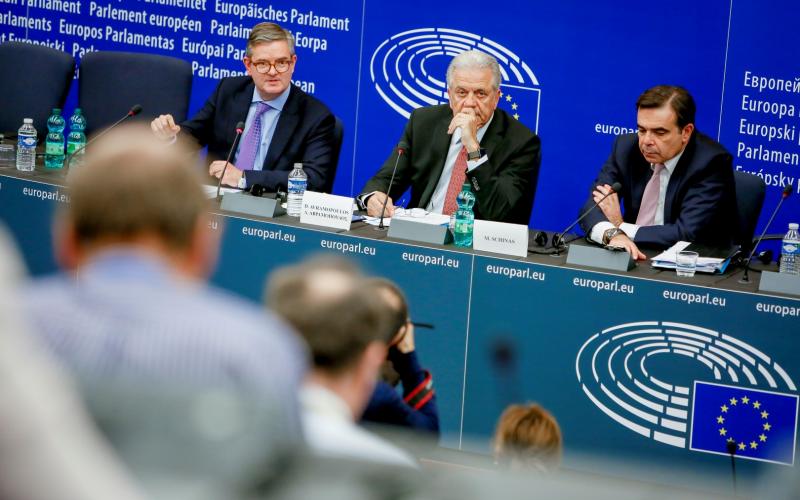
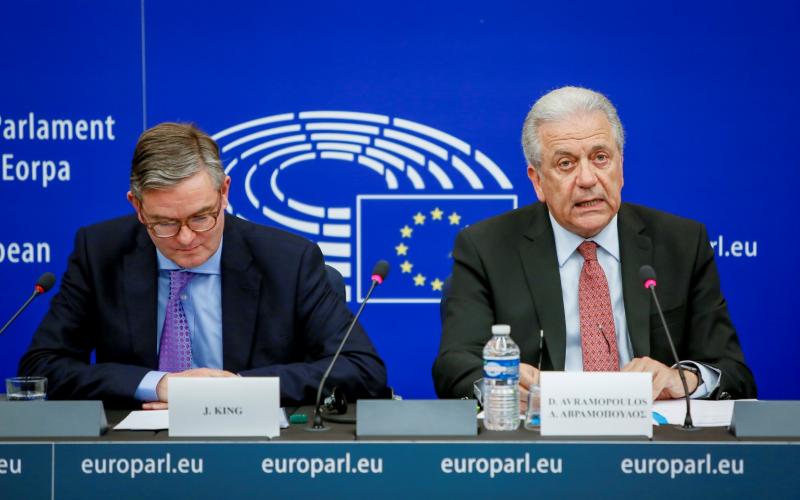
It’s a topical moment today to speak to you about relocation, after my discussion in the plenary this morning, and about security following the recent global cyber-attack.
Let me start with relocation. We have reached more than 18,000 relocations so far, and more than 70% of resettlements.
These results show what political will and determination can achieve.
It is entirely feasible to relocate all eligible people from Greece and Italy before September.
But that requires Member States to step-up the pace, and not reduce their efforts.
And it cannot be that while the majority of Member States are making efforts in a real European spirit, others continue to show no solidarity.
This is why I call on Poland and Hungary, who have not relocated a single person in need of protection, to start doing so right now.
Following my contacts with the Austrian Minister of Interior Sobotka, I welcome their positive attitude and their official announcement that they will start relocating from Italy.
I also call on Slovakia and Bulgaria to stop adopting strict and arbitrary preferences for relocation from Italy.
I call on Ireland and Estonia to find mutually acceptable working arrangements with Italy on security interviews, in the way that for example the Netherlands, France and Greece have worked out successfully.
There should be no practical or operational reasons for not doing relocation anymore.
I also call on Italy to speed-up its identification and registration procedures so that all who are eligible for relocation are swiftly identified and accommodated in relocation hubs.
In Greece, around 12,400 people are ready for relocation as we speak.
In Italy, more than 2000 are ready for relocation and an additional 700 should be registered soon.
In addition to this, over 1,100 Eritreans have so far arrived in 2017 and would still need to be registered for relocation.
Member States need to urgently increase their pledges to match those who are ready to be relocated, and then also deliver on those pledges swiftly.
I also call on Member States to prioritise relocation of unaccompanied minors from Greece and to step this up drastically from Italy.
From Italy, only two unaccompanied minors were relocated to the Netherlands for the first time in the last period.
I want to be very clear: those Member States that have not relocated anyone so far should start doing so immediately.
If no action is taken by them before the next report in June, the Commission will not hesitate to make use of its powers under the Treaties and to open infringement procedures.
Now let me move to Security. The value of our security information is maximised when our systems talk to each other.
The complex and fragmented systems we have today make us vulnerable.
Necessary information is not always available for the law enforcement officials that need it.
Today, we present a clear vision on how to act to correct this: to connect the dots and to eliminate blind spots, to step-up the security of our citizens across the EU.
We have done a lot to strengthen our borders and increase our security.
We proposed new systems such as the EU Entry/Exit System and the European Travel Information and Authorisation System (ETIAS), as well as to reinforce the Schengen Information System and Eurodac.
What we need now is for these systems to work together, efficiently and effectively.
To produce the critical information that law enforcement, border guards, and immigration authorities need, when they need it.
This is why we propose a new approach on interoperability.
You have all seen the massive cyberattack of the past few days. No one is immune to the risks.
Vigilance, coordination, and information-sharing between us are essential.
The cyberattack as well as the discussions that we are having between Europe and the United States on how to improve aviation security show how we cannot work in silos and isolation anymore when it comes to security today.
The threats are evolving. The security landscape is volatile.
Above all, we have to continue working to ensure that freedom and mobility go hand in hand with our security – without sacrificing one over the other.
Thank you