
Dear Ministers, dear colleagues, dear friends,
We are all gathered here for the same purpose. To work together, and to improve the way we work together, in tackling radicalisation. You are all here because you recognise the extent of this phenomenon in our societies; its complexity, and its depth.
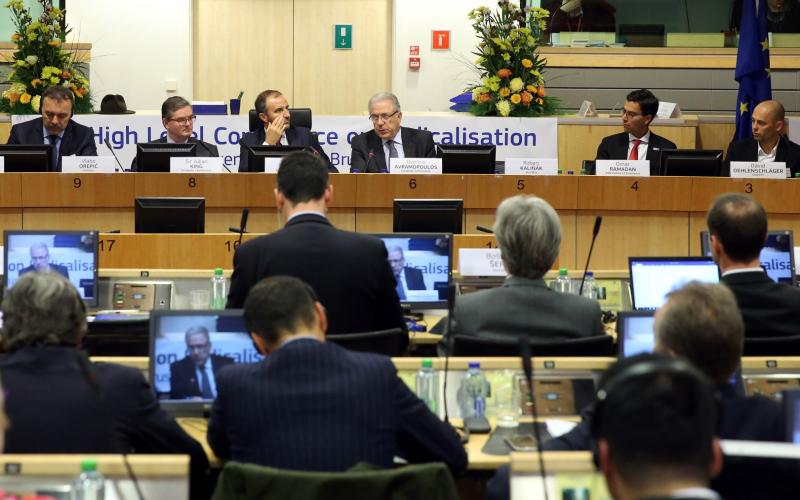
This 3rd High Level Conference of the Radicalisation Awareness Network, with an impressive presence of practitioners, experts, as well as ministers shows how active and engaged we all are, across the EU, in continuing our work to prevent and to counter radicalisation.
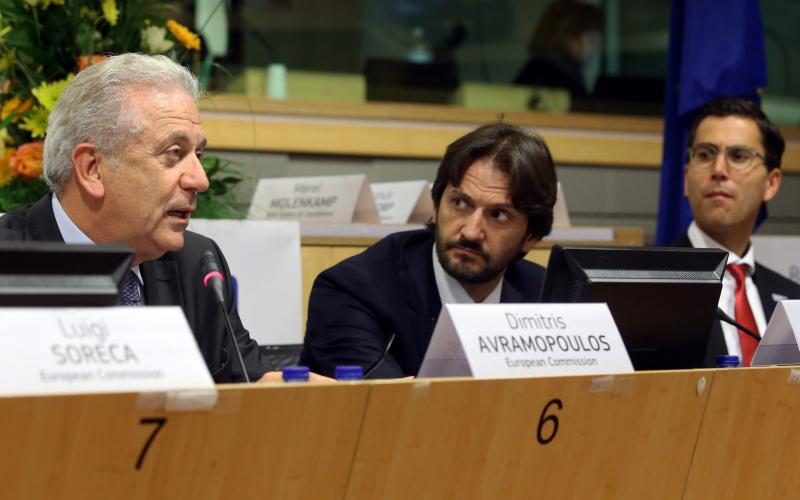
I would like to thank the RAN Centre of Excellence for making this event happen, as well as my friend, the Deputy Prime Minister and Minister of Interior of Slovakia, Robert Kalinak, and the other ministers present here today, for their availability and their engagement.
While radicalisation happens at the local level, its security implications and challenges are felt at all levels and across borders. Today provides a unique opportunity to connect the dots between all these different levels and actors, including us here at the EU level.
We all know how complex the issue of radicalisation is and that there is no one-size-fits-all approach. The issue of polarisation that you have discussed this morning is a challenge that I see as pan-European, global even, and across different policy areas. At a moment of rising nationalism, xenophobia and extremism, our challenge is to create and maintain a cohesive and inclusive society for all, to ensure the security of all our citizens.
This is why reaching out to all communities is so essential, and in particular the religious communities. This was a central element of the G6 meeting of Interior Ministers in Rome that Commissioner King and I attended, and it was also a prominent topic at the first EU-Arab World Summit in Athens last week.
We should never equate entire communities with terrorism. Just as we see that the majority of those who were radicalised and perpetrated terrorist attacks on European soil were in fact our own citizens, similarly those perpetrating terrorist attacks in the Middle East and Asia are Muslims turning against fellow Muslims.
But most importantly, the majority of those radicalised, whether here or abroad, are young. This is why the launch of the RAN Young Platform today is a concrete step forward in involving young people in the prevention of radicalisation and violent extremism, and empowering them to take an active role.
Several EU countries are doing this already, and it’s time to go further and coordinate actions on this across borders. The practical toolkit the RAN is presenting today to Member States for the development of their national strategies comes to answer to this need. This work should start not only in the prevention phase, but also in the very challenging context of when terrorist fighters return: there too, our approach needs to be multifaceted, including soft and hard security tools, something that you will be discussing this afternoon.
The role of the internet here is critical – this is why I launched the first annual Internet Forum last year to engage with internet companies on a voluntary basis to prevent and address extremist content online. I will be hosting the second Forum soon.
There is also a clear role for security and law enforcement, but also other stakeholders, both institutional and non-governmental.
Tackling radicalisation effectively, from A to Z, requires a whole-of-society and holistic approach. It is a priority that should be mainstreamed across all our services and political levels, from education and social inclusion, to prisons, to research, to internet, to monitoring and restricting traveling methods and fighting firearms trafficking and explosives.
Our work on radicalisation starts before and beyond radicalisation. It goes beyond the EU to our immediate neighbourhood. And because of that, radicalisation is not just a local or national issue. It is a European and global issue, requiring a joint approach.
No one is immune: one EU country might not face the challenge of radicalisation today, but it might do in the near future. This makes radicalisation one of the key priorities for the EU today.
But our work to prevent and counter it should not be directed from Brussels. It should be developed and executed by you, the practitioners that see the real challenges on the ground. This is bottom-up approach is the uniqueness of the RAN.
You are part of a network of more than 3,000 practitioners across Europe, and uniquely placed not just to exchange with your peers, but also to influence and steer policy discussions at the national and European levels.
Your mission is not just to talk to each other, but to concretely help each other find practical solutions.
Last year, we committed extra financial resources to the RAN in order to make it easier for practitioners to come together and learn from one another. I hope you will continue to take full advantage of this unique network and all of its tools.
I want to pay particular tribute to the many experts on the ground who are confronted with these challenges on a daily basis. I realise you are working often in uncharted territory. There is no silver bullet to this issue. By experimenting with different approaches and sharing your findings with your European colleagues, you are doing invaluable pioneer work that will make a difference for Europe as a whole.
If we really want to enhance our counter radicalisation efforts on an EU scale, and raise current standards, it is essential that your voices are heard, so that those working in policy and those at a political level can consider how these local best practices can be rolled out on a much larger scale.