
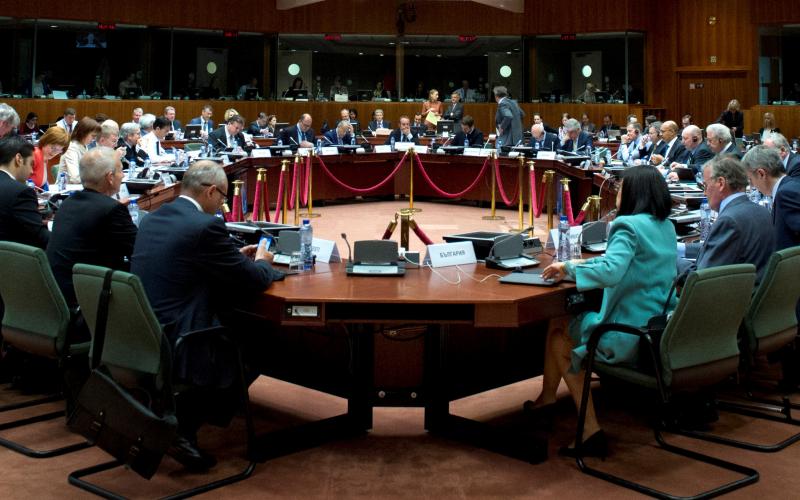
The Commissioner for Migration, Home Affairs and Citizenship, Dimitris Avramopoulos, presented the European Agenda on Migration at the meetings of the Foreign Affairs Council with the Foreign and Defence Ministers and the General Affairs Council with the Foreign and European Affairs Ministers, which took place yesterday and today in Brussels.
Commissioner Avramopoulos stressed that the Agenda is a comprehensive plan of the European Commission for addressing migration: “the Agenda is not an emergency response; it is a strategy that will lead us forward in the next five to ten years. The logic that sustains the Agenda’s proposals is very simple. Europe will extend a helping hand to those in need and will strive to attract those we need. This will be balanced by strong and targeted actions against those who try to abuse our system.”
Mr Avramopoulos also analysed the proposed relocation system for asylum seekers: “while Europe has taken action in order to save lives at sea, the obvious question is: ‘where are all these people going to stay?’ Under this mechanism, the Commission will propose the relocation of asylum seekers from frontline Member States to other Member States, using a distribution key,” based on objective, quantifiable and verifiable criteria, ie. the size of the population and the total GDP, the number of the asylum applications and persons already resettled, and the unemployment rate.
The Council also agreed to establish an EU maritime operation – EUNAVFOR Med – to break the business model of smugglers and traffickers of people in the Mediterranean. Mr. Avramopoulos stressed that “that the European Agenda on Migration fully integrates the Common Security and Defence Policy dimension” and that “harnessing the cooperation between civilian and military assets will allow us to support third countries to enhance border surveillance and dismantle the smugglers’ networks”, which is why “the Commission fully supports the CSDP maritime operation in the Mediterranean to disrupt human smuggling networks.”