
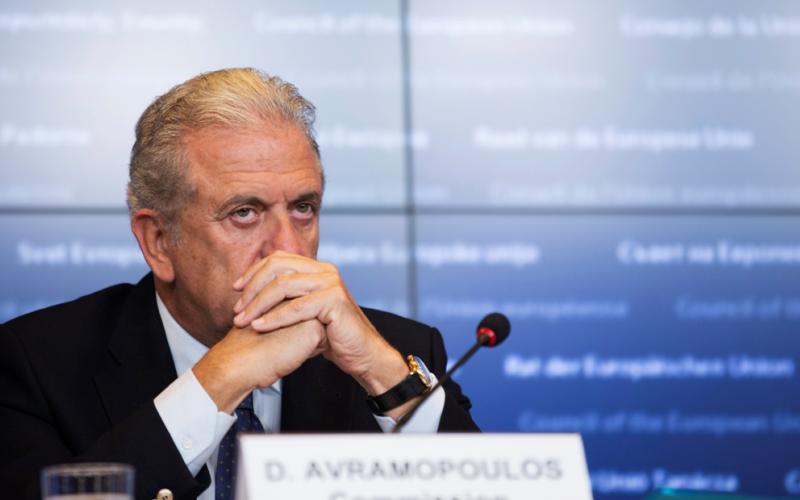
While migration has dominated the political agenda and the media lately, we should not underestimate the security challenges that we are still confronted with.
Terrorism still casts a dark shadow over the European Union.
The series of attacks perpetrated or attempted on European soil in 2015 are a stark reminder of the existing terrorist threats.
That is why we launched the European Agenda on Security earlier this year, where we underlined concrete actions to enhance the security of our citizens.
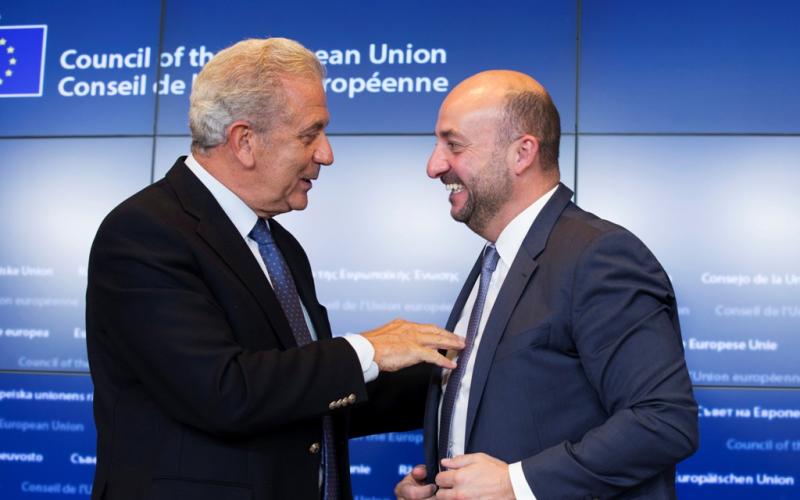
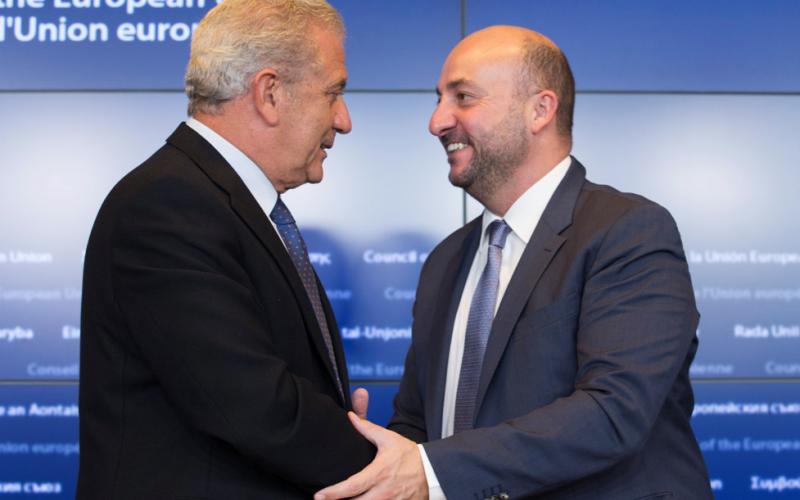
We are now implementing the Agenda, and I would like to thank Minister Etienne Schneider for putting security on the agenda today.
We discussed the issue of foreign terrorist fighters, counter-radicalisation strategies and enhanced border control.
At the beginning of December, I will be launching a Forum with key technology players on tackling extremist propaganda online.
Our “common risk indicators” for terrorism are also ready for national border authorities to make full use of them. I strongly encourage them to do so. This will help to ensure better border controls.
There is a third important point that we discussed today, and that is the need to act on firearms. It is crucial to jointly tackle this very serious security threat that goes beyond national borders.
Trafficking in firearms is a crime in itself. But it is also a major facilitator for all types of serious organised crime and terrorism.
We shall present a proposal to revise the existing Firearms Directive and we will already adopt new rules on the deactivation of firearms in December.
Following the most recent developments, we have of course also discussed the issue of rail security.
I am in favour of a very pragmatic approach, based on cooperation and practical work, and this is something that I will work on with my colleague Commissioner Violeta Bulc, in charge of our transport policies.
In the meantime I am pleased to inform you that we are making progress on the PNR proposal with the Council and European Parliament.
I am hopeful that with further work the Council and Parliament will be able to reach an agreement by the end of the year.
Finally, let me also share a few words on the High-Level Conference on the Western Balkans migratory routes which will take place now.
I am pleased that the EU Member States and our partners from Turkey, Jordan, Lebanon and the Western Balkan countries will be able to share common views on how to address the main challenges.
The refugee crisis that we are facing is not just a European one, it also affects our immediate neighbourhood.
As you know, the Commission is supporting the migration policy of 6 Western Balkan countries through the pre-accession instruments.
Today, Member States supported our proposal to offer €17 million in financial and humanitarian aid to the Former Yugoslav Republic of Macedonia and Serbia to deal with the current crisis.
In addition, an €8 million regional programme, covering the Western Balkans and Turkey, will also start soon.
While the EU and Member States will marshall considerable financial assistance, we also expect our partners to enhance asylum and registration capacity, ensure stronger border controls and combat migrant smuggling.
Solidarity and responsibility must go hand in hand, not just within the EU but also with our neighbouring partners.
This evening I intend to raise with our partners the importance of return, on the basis of existing readmission agreements.
It is important that we share responsibility not only for providing protection to those in genuine need, but that we also ensure that those who do not merit protection and no longer meet the conditions to stay in the Schengen area are swiftly returned to their countries of origin, either directly or through transit states.
Our joint work with our partners in the EU and outside is to continue as set out in the discussions today.
Thank you.