
Video: https://youtu.be/uO-zqRMVb1M
Our priority right now is to address the challenges of the refugee crisis.
I have just come back from Turkey.
You all followed closely what happened these last days.
But this should not let us forget the importance of integration of legal migrants, of refugees.
Successful integration is an essential element of a successful migration policy.
And integration takes place at the local level.
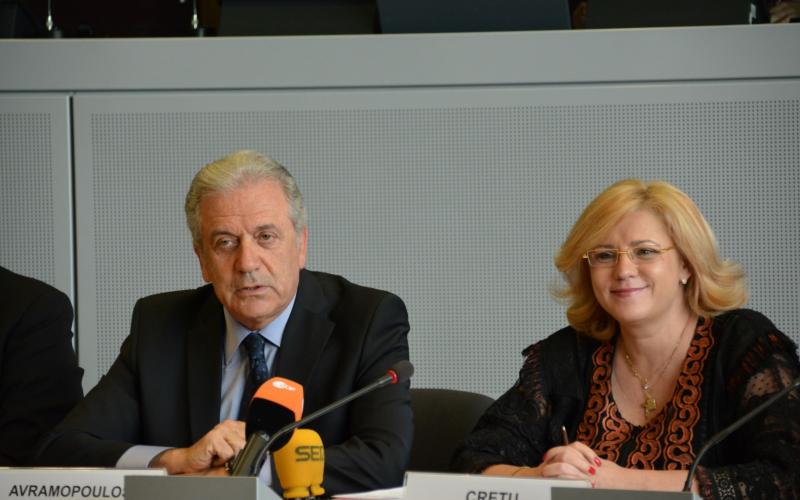
This is why I am grateful to Eurocities and Commissioner Corina Cretu for having taken this initiative.
Cities are at the frontline of this process.
Mayors and their municipalities have a major role in the integration process as they manage the challenge of welcoming migrants in their respective communities on a day-to-day basis.
And I can tell you from personal experience: this process is far from easy.
When I became Mayor of Athens in the mid-1990s, the integration of migrants was one of the challenges I had to deal with throughout my two terms.
It was a daily challenge.
With the latest refugee crisis, and the sheer volume of people that arrived since last year, this challenge has become even more difficult.
Frankly speaking, the crisis has pushed many cities to their limits.
When refugees arrive to Europe, the local authorities are usually the first to provide for their basic needs: first aid, food, clothing, shelter, etc.
They are also responsible for hosting reception centres and, now, with the recent relocation scheme, they are also the ones who are welcoming the relocated refugees and having to integrate them in their local societies.
So we should recognise and congratulate cities for their valuable work in dealing with the refugee crisis.
This work is the ultimate expression of Europe’s universal values:
solidarity, responsibility, dignity, and respect for human rights.
The challenge of integration should, however, not make us forget the advantages of multicultural cities.
A more culturally aware society and ethnically diverse workforce can help foster a culture of tolerance and acceptance of differences.
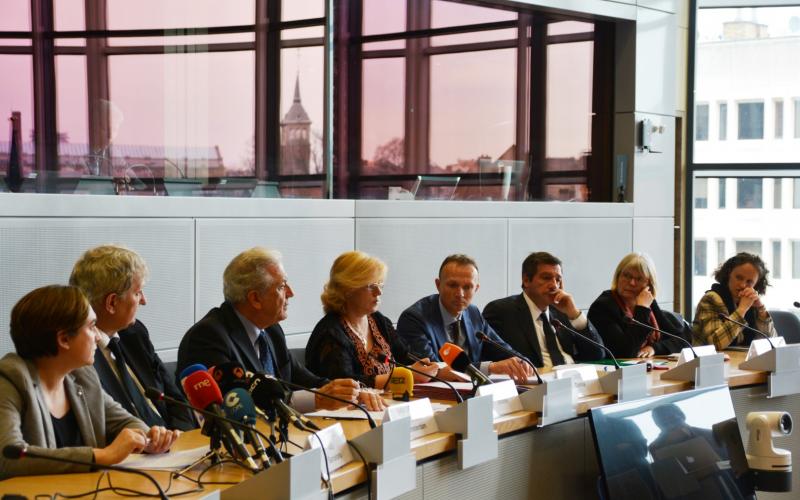
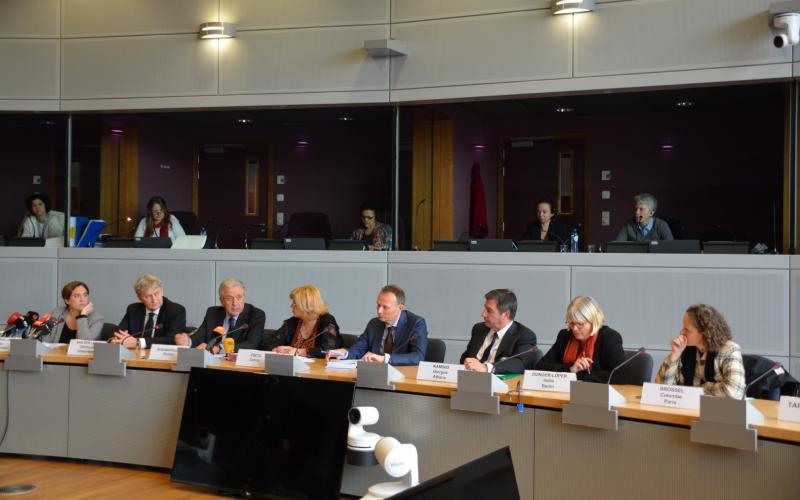
Dear friends, Today’s event has been very useful.
It offered insight on how the European Commission can better assist the efforts of cities.
It also underscored the importance of strengthening the dialogue and cooperation between the local and European authorities.
The exchange of experiences and best practices is a great example of this cooperation which can help identify effective, efficient and financially sound solutions to the current challenges.
The Commission is committed to further assisting both, Member States and cities with additional financial means, targeted guidance
and policy advice.
For the period 2014-2020, the Commission has made available around 760 million EUR for integration purposes for Member States under the Asylum, Migration and Integration Fund.
We have also encouraged Member States to look into how, the existing allocations under the European Structural and Investment Funds could be used for a wide range of measures regarding social inclusion, education and labour market integration, including access to services and infrastructure.
But it is not just about money.
The Commission is now working on an EU Action Plan on Integration.
We want to underline the importance on integration;
Offer concrete support to Member States on integrating, not just those who have recently arrived, but also those who may have been in Europe for several years.
One thing is clear:
we cannot afford fragmentation at any level of the process.
We must work together, we must coordinate our efforts, and of course Europe’s cities must be at the heart of this process.